

Iran is reportedly nearing a deal with China to purchase anti-ship cruise missiles, as the US threatens strikes on the Islamic Republic and presses its biggest military build-up in the Middle East in decades. Although the negotiations have been on since the past two years, the 12-day war between Israel and Iran in June has accelerated the discussions.
China had been a major weapons supplier to Iran in the 1980s, but that dwindled by the next decade due to international pressure.
The deal for the Chinese-made CM-302 missiles is near completion, though no delivery date has been agreed upon, Reuters reported.
Read | ‘Leave Israel Today’: US Envoy’s Message To Staff Amid Iran Tension
Apart from the CM-302, the Islamic Republic is also in talks to acquire Chinese surface-to-air missile systems, so-called MANPADS, anti-ballistic weapons, and anti-satellite weapons, the publication said.
About The CM-302 Missiles
The supersonic missiles have a range of about 290 kilometres and are designed to evade shipborne defences by flying low and fast. Their deployment would significantly enhance Iran’s strike capabilities and pose a threat to US naval forces in the region, two weapons experts said, according to Reuters.
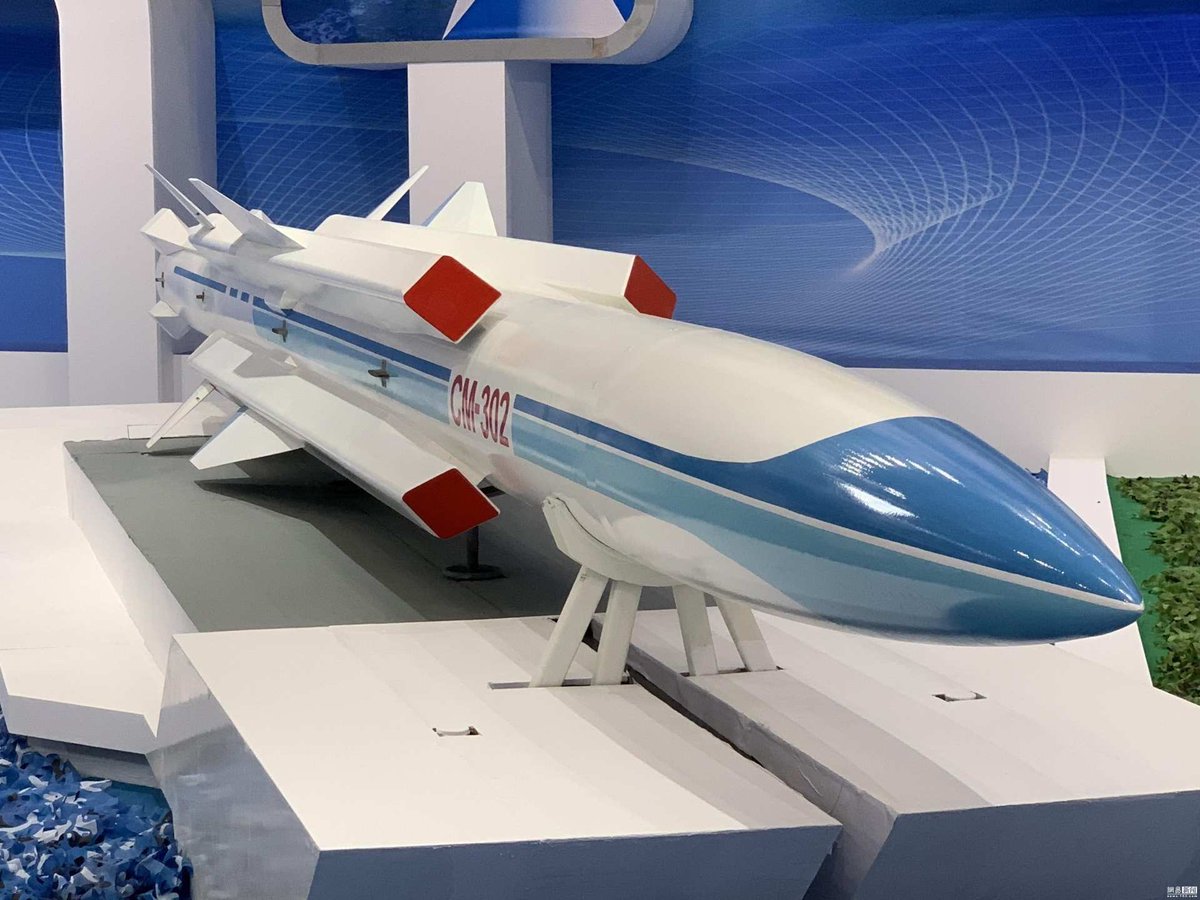
The CM-302 purchase would be a significant improvement in an Iranian arsenal depleted by last year’s war.
Photo Credit: @warsurv
“It’s a complete gamechanger if Iran has the supersonic capability to attack ships in the area. These missiles are very difficult to intercept,” said Danny Citrinowicz, a former Israeli intelligence officer and now senior Iran researcher at Israel’s Institute for National Security Studies think tank.
Read | In Historic First, US Deploys Stealth Fighters In Israel Amid Iran Tensions
The missiles would be among the most advanced military hardware to be transferred to Iran by China and defy a United Nations weapons embargo that was first imposed in 2006. The sanctions were suspended in 2015 as part of a nuclear deal with the US and allies and then reimposed last September.
China markets the CM-302 as the world’s best anti-ship missile, capable of sinking an aircraft carrier or destroyer. The weapons system can be mounted on ships, aircraft or mobile ground vehicles. It can also take out targets on land.
Moreover, according to Pieter Wezeman, a senior researcher at the Stockholm International Peace Research Institute, the CM-302 purchase would be a significant improvement in an Iranian arsenal depleted by last year’s war.
What China’s Involvement Means
The sale underscores the growing military ties between Iran and China and would further complicate US efforts to curb Iran’s missile and nuclear programme.
Read | Inside Iran’s Missile Power: Why It Alarms West And How Far They Can Reach
The move also places China in a position that was long dominated by US military might.
Citrinowicz also told Reuters that China does not want a pro-Western regime in Iran. “That would be a threat to their interests. They are hoping that this regime will stay”, he added.
Alessandro Arduino, an affiliate lecturer at King’s College London’s Lau China Institute and associate fellow with the Royal United Services Institute, told Newsweek that, “The talk of a Chinese transfer of advanced anti-ship cruise missiles to Iran, particularly systems such as the YJ-series, is, at this stage, more politically useful than strategically plausible.”
He said that without shipping a single missile to Iran, China could instill uncertainty in US planning.
Last year the US Treasury Department sanctioned several Chinese entities for supplying chemical precursors to Iran’s Islamic Revolutionary Guard Corps for use in its ballistic missile programme. However, China rejected those allegations, saying it was unaware of the cases cited in the sanctions and that it strictly enforces export controls on dual-use products.
Trump said on February 19 he was giving Iran 10 days to reach an agreement over its nuclear programme or face military action.