

Soon after American President Donald Trump and Israeli officials claimed that Ayatollah Ali Khamenei had been killed, the Iranian Supreme Leader’s X account posted a cryptic message, advancing Iranian media’s claims that the 86-year-old might have survived the US-Israeli strikes in Tehran. The post, written in Persian, read: “In the name of Nami Haider (peace be upon him).”
به نام نامی حیدر علیهالسلام pic.twitter.com/n848j6KASq
— KHAMENEI.IR | فارسی (@Khamenei_fa) February 28, 2026
Meanwhile, Iranian media have dismissed Trump’s claim that Khamenei is dead. Citing a source close to Khamenei’s office, Iranian state media, IRNA, reported that the “leader of the revolution is steadfast and firm in commanding the field”.
Iranian news agencies Tasnim and Mehr also made similar claims, while Iran Times, citing sources, said Khamenei was “completely safe and sound”.
Trump Says Khamenei Is Dead
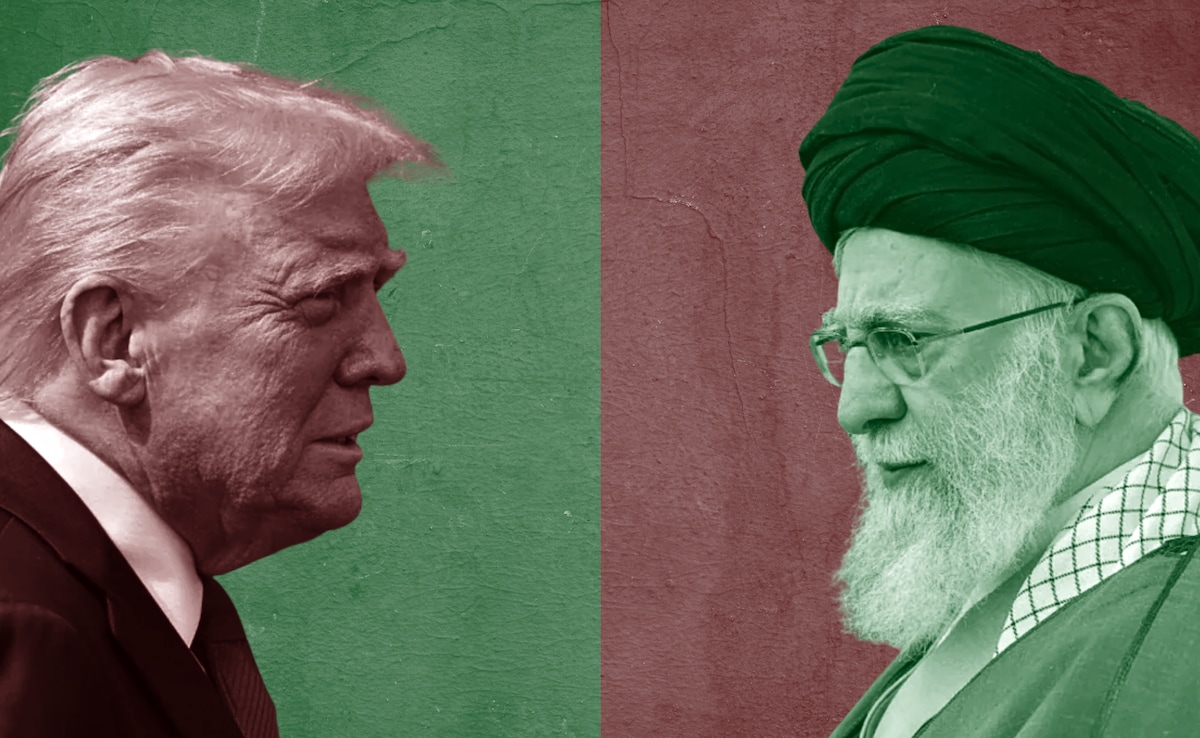
Trump, who is monitoring the US-Israel joint operation against Iran from his Mar-a-Lago oceanfront resort in Florida, posted on Saturday afternoon that Iranian Supreme Leader Ayatollah Ali Khamenei had died in the strikes.
“This is the single greatest chance for the Iranian people to take back their Country,” the American commander-in-chief wrote on Truth Social after claiming Khamenei, whom he described as “one of the most evil people in history” was killed in an air strike.
Earlier, a senior Israeli official also told Reuters that Khamenei’s body had been found, and Trump concurred in a post on Truth Social.
“This is not only Justice for the people of Iran, but for all Great Americans, and those people from many Countries throughout the World, that have been killed or mutilated by Khamenei and his gang of bloodthirsty THUGS,” Trump wrote.
The United States believes Khamenei, along with five to 10 top Iranian leaders, was killed in an initial Israeli strike, according to a Fox News reporter.
About Ayatollah Ali Khamenei
Ayatollah Ali Khamenei, 86, has ruled Iran since 1989. As Supreme Leader, he holds ultimate authority over all branches of government, the military and the judiciary in the Shia Islamic republic.
He has been an inveterate foe of the West, crushing internal opposition while supporting proxy forces across the region in the hope of making his country respected and feared.
If confirmed, Khamenei’s death would represent a massive blow to the Islamic Republic that he had led since 1989, a decade after rising to prominence in the theocratic revolution that toppled Iran’s monarchy and rocked the Middle East.
Khamenei had survived foreign pressure before but, even before Saturday’s attack, he was facing the gravest crisis of his 36-year rule, attempting to spin out negotiations with the United States over Iran’s nuclear programme. Already this year, he had ordered the deadliest crackdown since the 1979 Islamic Revolution, saying those protesting nationwide, initially against soaring prices, “should be put in their place” before security forces opened fire on demonstrators chanting “Death to the dictator!”.
And only last June, Khamenei had been forced into hiding during 12 days of airstrikes by Israel and then the US that killed several close associates and Revolutionary Guard commanders and smashed prized nuclear and missile facilities.
That assault was among the many indirect results of the attack on Israel by the Iranian-backed Palestinian group Hamas on October 7, 2023, which not only triggered the war in Gaza but also spurred Israel to hammer Tehran’s other regional proxies.
With Hezbollah weakened in Lebanon and Syria’s Bashar al-Assad toppled, Khamenei’s reach across the Middle East was stunted, while the US demanded he abandon Iran’s last major strategic lever – its ballistic missiles.
Khamenei refused to even discuss giving up missiles, which Iran saw as its only remaining deterrent to Israeli attack, a display of intransigence that may have helped invite the airstrikes that targeted him.
As the US military massed air and naval forces in the region, Khamenei’s calculations drew on a character moulded by revolution, years of turmoil and war with Iraq, decades of sparring with the US, and a ruthless accumulation of power.
While elected officials managed day-to-day affairs, no major policy – especially one concerning the United States – could proceed without his explicit approval; Khamenei’s mastery of Iran’s complex system of clerical rule combined with limited democracy ensured that no other group could challenge his decisions.