

On February 24, satellite imagery of Dubai showed ordered highways, glittering towers and artificial islands. By March 1, the picture had changed.
Fresh satellite pictures revealed dark plumes of smoke rising over parts of the skyline. The images emerged as Iran fired a barrage of drones and missiles across the Gulf in retaliation for United States and Israeli strikes.
For decades, Dubai has been perceived, particularly by expatriates, as a refuge from instability elsewhere in the Middle East. Arabs escaping conflict zones, Western professionals drawn by low taxes and business opportunities, and investors seeking predictable regulation have all contributed to a population in which expatriates make up around 90 per cent of residents.
That perception has now been shaken.
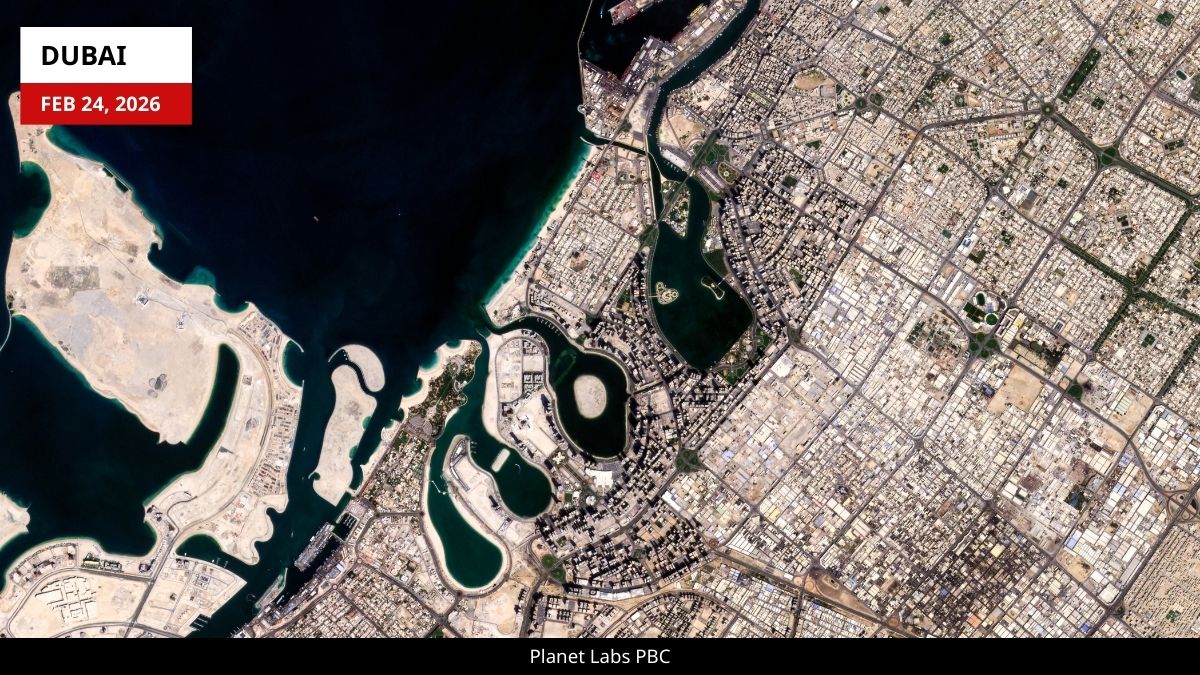
Dubai on February 24, 2026 (See high-res)
Iran fired hundreds of drones and missiles towards Gulf states. Although most were intercepted by air defence systems, debris caused damage at several prominent locations in Dubai. Among the sites affected were areas near the Burj Al Arab luxury hotel and the Palm Jumeirah, home to high-end residences, hotels and the kind of waterfront apartments frequently showcased on social media.
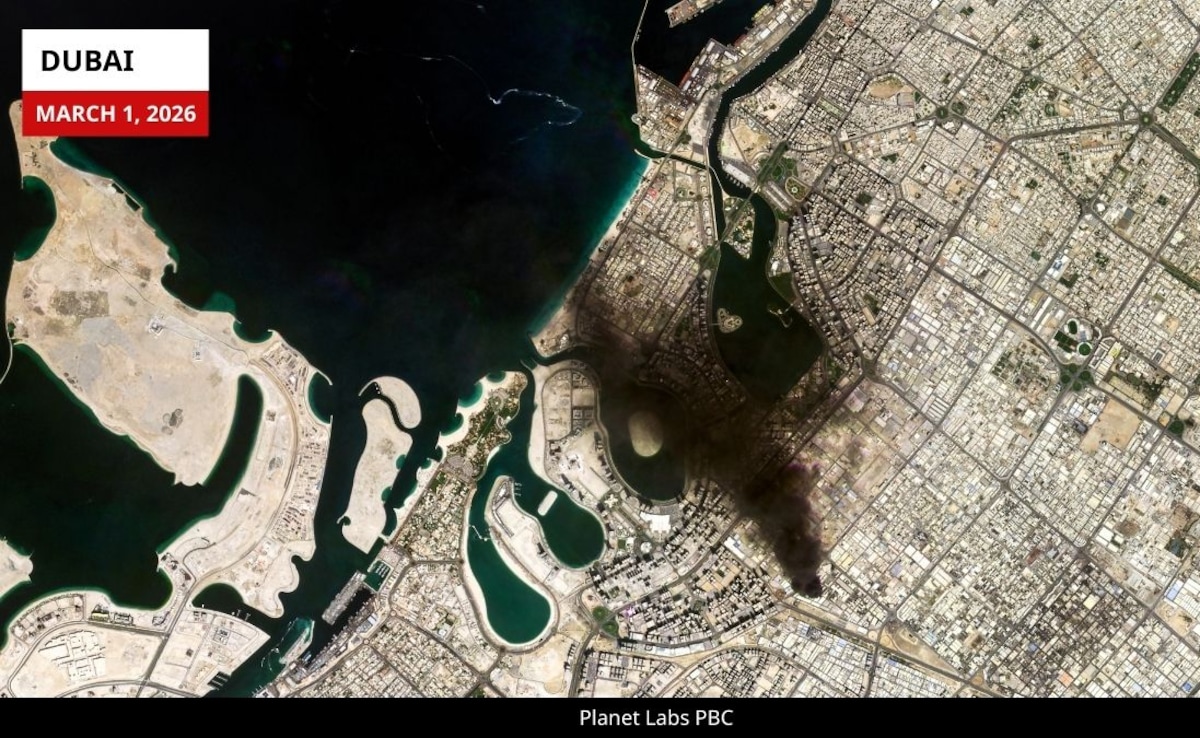
Dubai on March 1, 2026 (See high-res)
Residents described being jolted awake by blasts as interceptors streaked across the sky.
Dubai’s media office said footage of past fires was circulating online and warned that legal action would be taken against those sharing misleading content. Some influencers subsequently appeared to remove earlier posts.
By Sunday, as Iran’s retaliation widened across the Gulf region, residents described a city that felt unusually subdued. The UAE Ministry of Human Resources recommended remote work for the private sector until Tuesday.
The attacks on Gulf states are part of an expanding conflict triggered by a surprise United States and Israeli bombardment of Iran that killed the country’s supreme leader, Ayatollah Ali Khamenei, along with other senior figures.
Iran vowed revenge and launched missiles towards Israel and Gulf Arab states hosting US forces. Israel pledged what it called “non-stop” strikes against Iranian leadership and military targets.
The US military said three American service members had been killed and five others seriously wounded, with several more suffering minor injuries and concussions.
In Tehran, explosions sent large plumes of smoke into the sky near government buildings. Iranian authorities said more than 200 people had been killed since the start of US and Israeli strikes.
In southern Iran, at least 165 people were reported killed when a girls’ school was struck, according to the state news agency IRNA. The Israeli military said it was not aware of strikes in that area, and the US military said it was examining the reports.