

2,000 ships, 20,000 sailors, food and water running out, and a blockade with no end in sight — as the war in the Middle East enters its fifth week and Iran’s threats choke the Strait of Hormuz, the lives of thousands of seafarers hang in the balance. The sailors are reaching out for help while stuck, not just due to the blockade, but also because of a complex web of maritime laws that grease the wheels of global trade but trap the sailors in situations like this.
Calls For Help
According to a report by news agency AFP, helplines for sailors are overwhelmed with messages from crews stuck in the Gulf. “Immediate supply of food, drinking water, basic necessities is required to sustain the crew,” read a message to the International Transport Workers’ Federation (ITF) Seafarer Support team.
“It is an extraordinary situation, there is a lot of panic,” Mohamed Arrachedi, ITF’s Network Coordinator for the Arab World and Iran, who is in charge of handling requests from sailors.
“I get calls from seafarers at two o’clock, three o’clock in the morning. They call me the minute they have access to the internet,” Arrachedi has told AFP. “One seafarer called in a panic, saying: ‘We are here bombed. We don’t want to die. Please help me, sir. Please get us from here,” he added.
Why The Sailors Can’t Leave
After the conflict began, the International Bargaining Forum declared the area around the Strait of Hormuz a war zone. In such a situation, seafarers are entitled to repatriation at the company’s cost and double pay for those working.
But many seafarers are on ships without these agreements, and the Hormuz blockade has hit them the worst. In a mail dated March 18, a seafarer said the ship’s operator was ignoring the crew’s requests to leave. “They are forcing us to continue to do cargo operations and STS (ship-to-ship operations) even (when) we raise our concerns about our safety and we are in a war-like area. They are keeping us in a position with no options,” read the email.
The Low Price Of Life
Lucian Craciun, one of the five members of ITF’s support team that is processing requests from seafarers, told AFP that about 50 per cent of the emails they have received are about pay. He said many seafarers choose to stay on the ships despite the danger because they cannot afford to leave.
AFP reported that in one email, a seafarer asked for confirmation if his salary would go from $16 a day to $32 because he was in a war zone. According to the ITF, such low salaries indicate that the shipowners do not have labour agreements to ensure decent pay. The AFP reported that seafarers working under such arrangements are particularly at risk because their contracts often do not cover operations in war zones.
The Shipping Maze
According to a report in Wired, modern shipping spans multiple jurisdictions, meaning a vessel can be owned in one country, registered in another, managed by a third party, and physically located elsewhere.
Now, in normal circumstances, this facilitates global trade. But during a crisis, such as now, there is no single authority clearly responsible for the seafarers. Any chance of return depends on all these jurisdictions working together.
The Wired reports that organisations such as ITF say intervention is possible, but depends on coordination across jurisdictions and cooperation from shipowners.
10 Sailors Dead
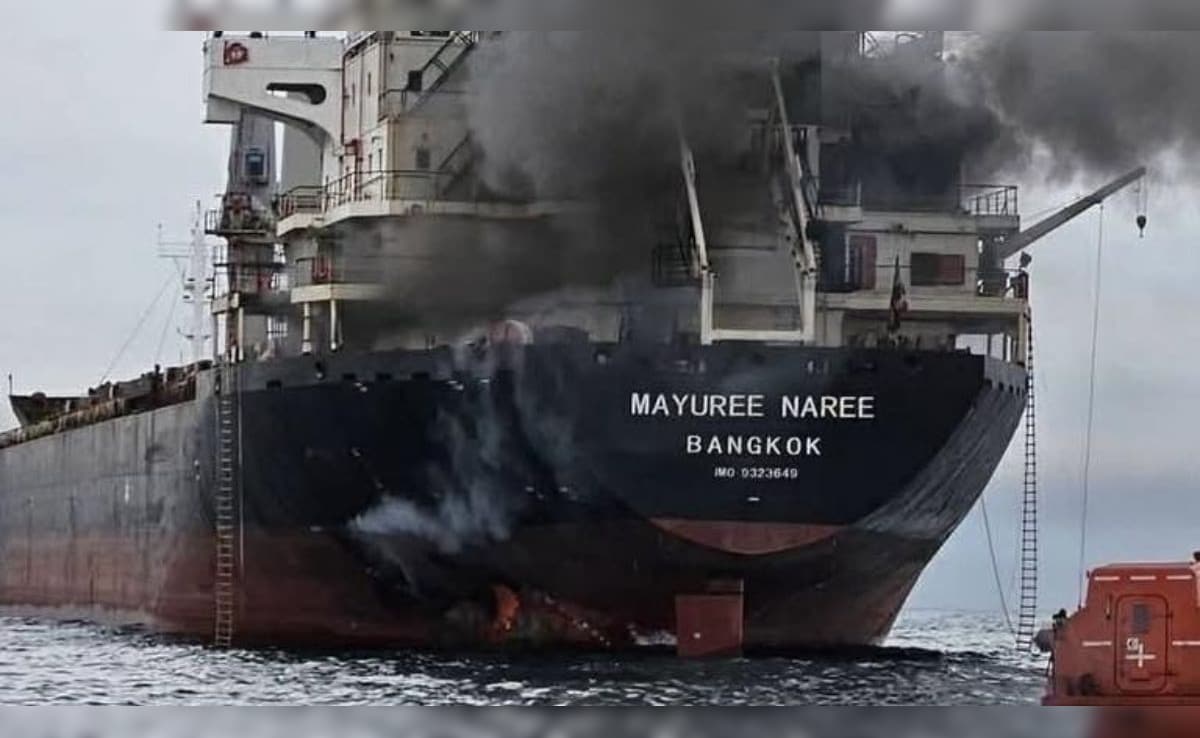
According to the International Maritime Organization, there have been 19 confirmed incidents involving vessels since the conflict began, and 10 seafarers have died in these incidents.
Iran has threatened to hit ships that try to cross the Strait, choking one-fifth of the world’s oil and gas supplies and triggering energy security concerns in Asian markets such as India and China.
The blockade of the Strait is driving inflation across the globe, and pressure is building on the US, which targeted Iran along with Israel on February 28.