

The US has no backup plan if the talks with Iran fail, President Donald Trump has said, as high-level delegations from the two sides meet today in Islamabad to discuss ending the war in the Middle East. The warning came in response to a question on if Washington has a Plan B ready in case the US-Iran negotiations collapse or Tehran refuses to reopen the Strait of Hormuz.
“You don’t need a backup plan. Their military is defeated. We have integrated everything. They have very few missiles. They have very few manufacturing capabilities. We have hit them very hard. Our military is amazing; the job they have done,” the US president told reporters this morning.
Read: Key US-Iran Talks In Pakistan Today Could End The War Or Ramp It Up
Reports suggest that the US has deployed more forces to the Middle East, even as a fragile two-week ceasefire offers a rare moment of peace in the Gulf after weeks of intense missile battles.
The talks in Pakistan will begin Saturday morning (local time), according to the White House.
The Iranian delegation led by Parliament Speaker Mohammad Bagher Ghalibaf and comprising Foreign Minister Seyed Abbas Araghchi reached Islamabad this morning, Pakistan’s foreign ministry said in a statement.
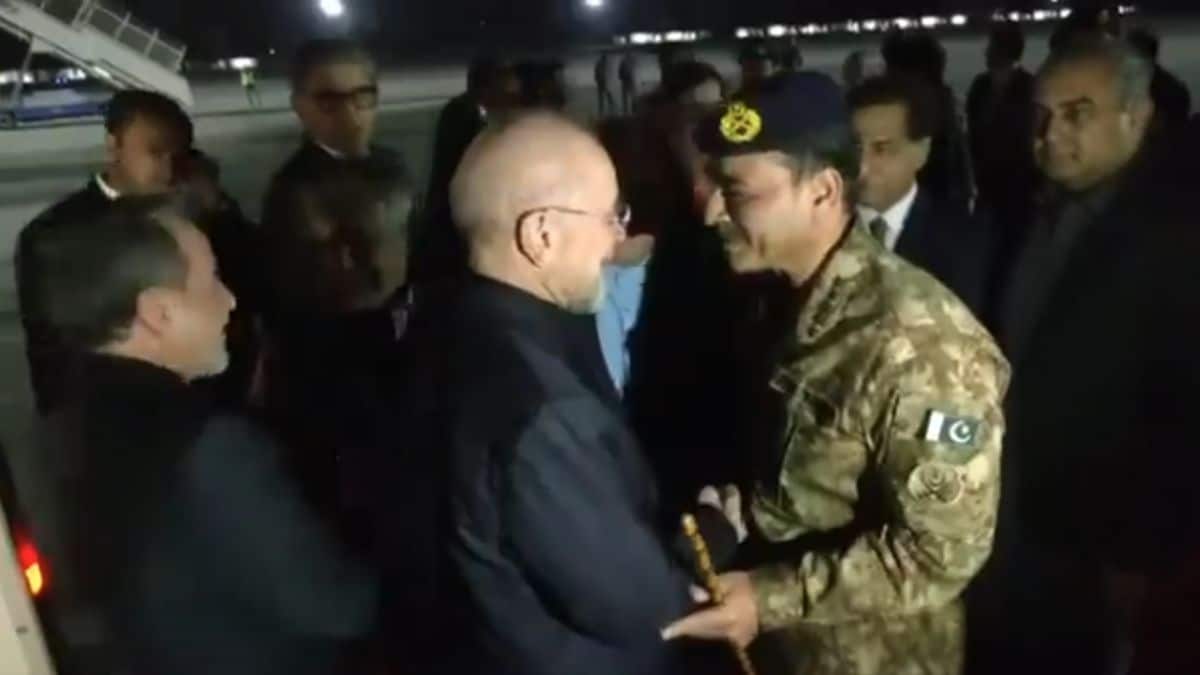
Visuals showed them being received by Pakistani minister Ishaq Dar and Army chief and de facto leader Asim Munir.
Vice President JD Vance, the seemingly most reluctant defender of the war with Iran, is on his way to lead the US side in the talks. Before leaving Paris, he warned Tehran not to “play” Washington. “If they try and play us, then they’re gonna find that the negotiating team is not that receptive,” he said.
Read: Blood-Soaked School Bags, Shoes: Iran Team’s Minab “Companions” On Flight To Pakistan
The US and Iran had earlier differed on the negotiating terms, with the Trump administration developing a 15-point framework that reportedly calls for Iran to surrender its highly enriched uranium and accept limits on its military. Iran had sent its own 10-point plan seeking reparations and the US to acknowledge Tehran’s sovereignty on the Strait of Hormuz.
On another front, Lebanon and Israel gear up for talks next week as a momentary pause provides relief from the intense strikes a day earlier that threatened a collapse of the US-Iran negotiations.