

The United States has spent decades quietly building an expertise few countries possess, which is the removal, transport and neutralisation of highly enriched uranium from foreign soil. As Washington now presses for Iran‘s stockpile of enriched uranium to be handed over or removed, experts believe that this would be an operation unlike any before it.
The latest round of tensions was triggered by remarks from US President Donald Trump, who said Washington would secure Iran’s enriched uranium stockpile, which he described as “nuclear dust”, buried by US strikes. Within hours, Tehran issued a categorical denial.
“Iran’s enriched uranium is not going to be transferred anywhere,” foreign ministry spokesman Esmaeil Baqaei said on state television.
Before US and Israeli strikes in June 2025, the International Atomic Energy Agency estimated that Iran possessed roughly 441 kilograms of uranium enriched to 60 per cent, alongside approximately 200 kilograms enriched to 20 per cent. Experts note that material at 60 per cent purity can be further enriched to 90 per cent — the threshold for nuclear weapons — in a matter of weeks.
That capability, even if currently degraded by military action, is what Washington seeks to eliminate entirely.
Technical Operation In A Battlefield
Key storage sites, including facilities at Isfahan and Natanz, have been heavily damaged by airstrikes. Satellite imagery shows tunnel entrances buried under debris and reinforced barriers. International inspectors have not visited these locations for nearly a year, leaving uncertainty over the condition, quantity and exact location of the material.
“It probably would be the most complex uranium removal operation in history,” Andrew Weber, a former Pentagon official involved in past removal missions, was quoted as saying by the Wall Street Journal.
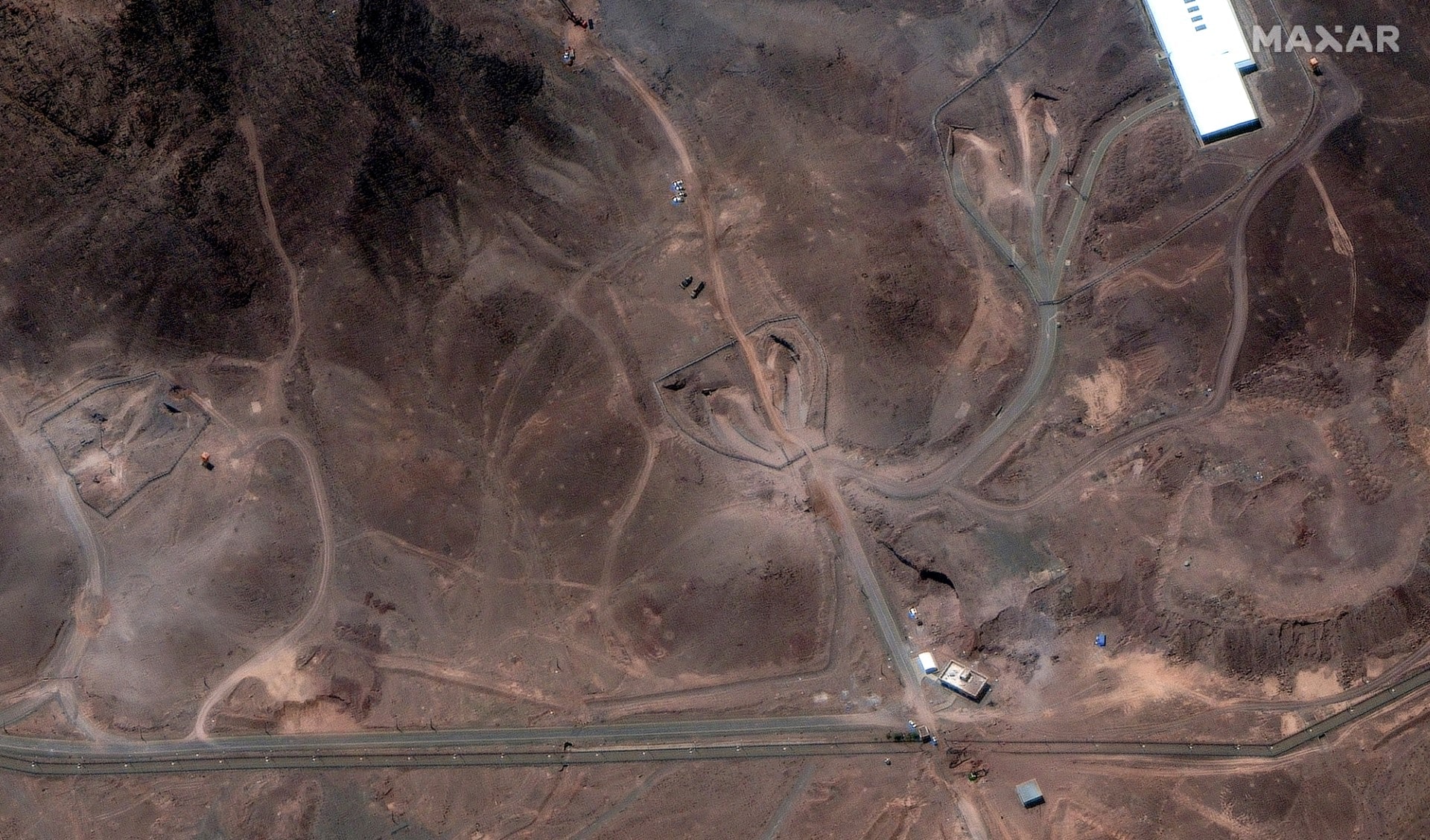
This handout satellite image provided by Maxar Technologies and dated June 29, 2025 shows a view of tunnel entrances at the Fordo (Fordow) Fuel Enrichment Plant complex, about 30 kilometres north of Qom in central Iran. (Photo by Satellite image ©2025 Maxar Technologies / AFP)
Photo Credit: Maxar/AFP
But why complex? Extracting uranium would require teams to enter bombed and potentially unstable underground facilities. The material itself is stored in gaseous form in heavy cylinders, which may have been damaged during strikes. Any compromise in containment raises the risk of radiation exposure or leakage.
Where Would The Uranium Go?
Iran has already rejected any proposal involving direct transfer to the United States. Alternative options exist but are equally fraught.
One precedent lies in the 2015 nuclear agreement, under which more than 11 tonnes of Iranian uranium enriched to up to 20 per cent were shipped to Russia in exchange for sanctions relief. That deal capped Iran’s stockpile at 300 kilograms of low-enriched uranium. It began to unravel after Washington withdrew in 2018.
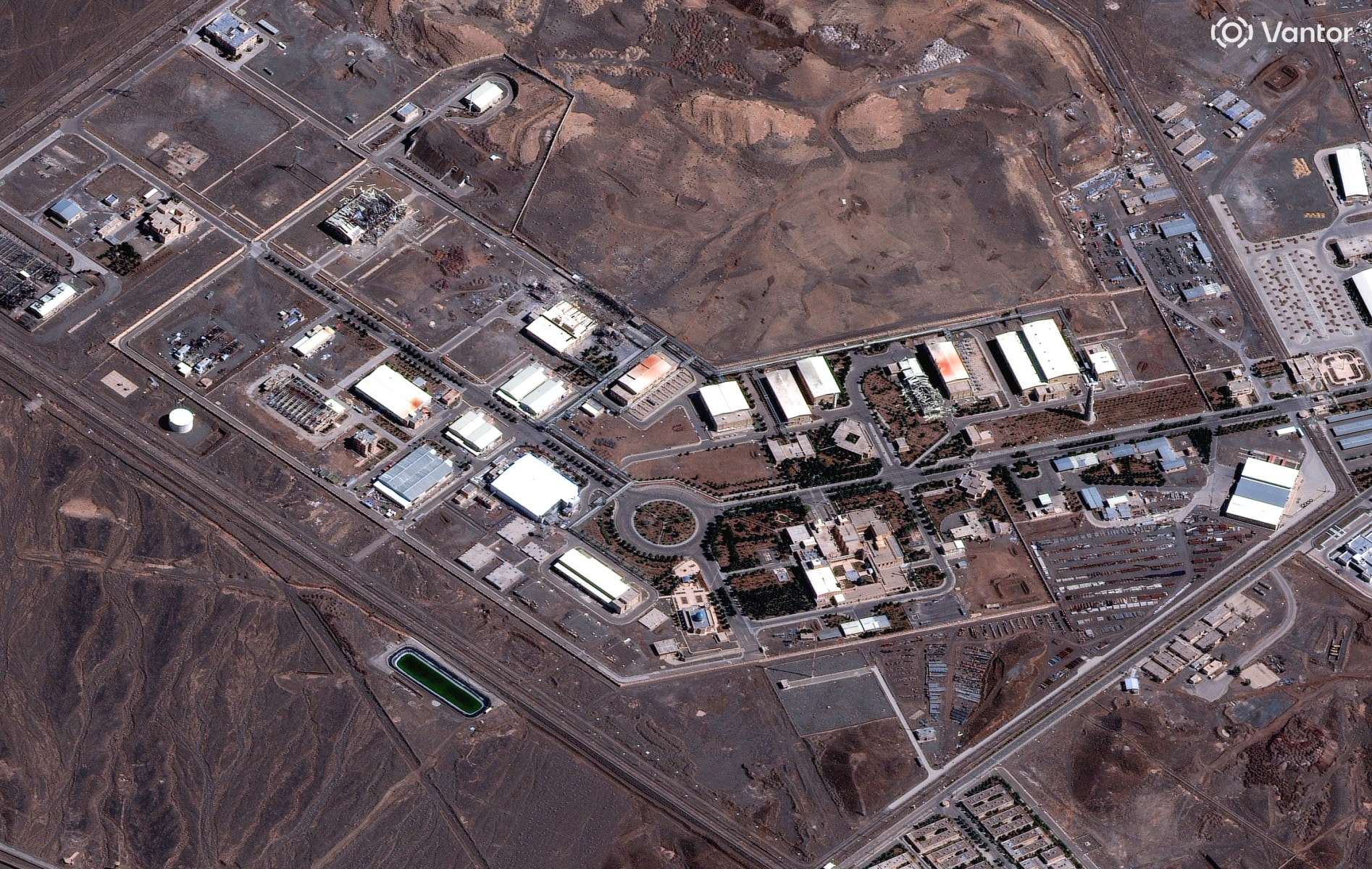
This handout satellite image courtesy of Vantor shows the Natanz Nuclear Facility near Natanz, Isfahan province, in central Iran on March 7, 2026.
Photo Credit: Vantor/AFP
Today, similar arrangements are under discussion. According to reports, the US may offer access to roughly $20 billion in frozen Iranian funds in exchange for the uranium stockpile. Another proposal involves transferring the material to Kazakhstan, where an IAEA-controlled bank of low-enriched uranium is located. There, the material could be diluted and stored for civilian use.
Yet each option requires political agreement between the US and Iran that currently appears absent.
Lessons From The Past
In 1994, the US executed Project Sapphire, a covert operation to remove approximately 600 kg of weapons-grade uranium from Kazakhstan. Over several weeks, US teams repackaged the material into hundreds of specialised containers before flying it out aboard C-5 transport aircraft in what became the longest flights of their kind.
The uranium was transported to Oak Ridge National Laboratory in the southern state of Tennessee, where it was downblended for use in civilian reactors.
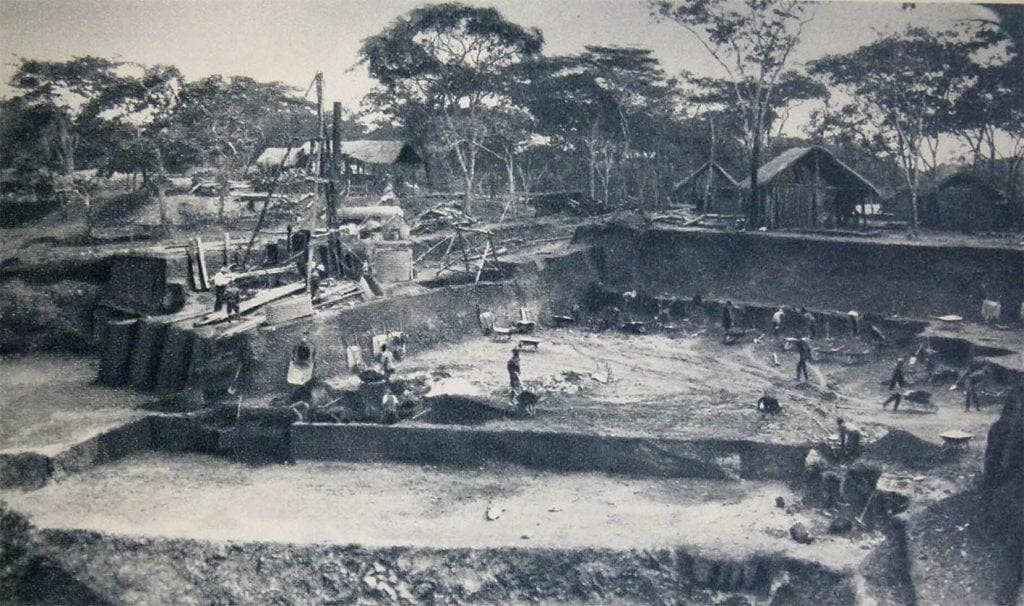
Shinkolobwe mine in the Katanga region of the Democratic Republic of the Congo.
Photo Credit: Mail and Guardian
A similar mission unfolded in 1998, when US and British experts removed highly enriched uranium from a research reactor near Tbilisi in Georgia. That material was flown to Scotland under tight security.
During the Second World War, Washington secured uranium from the Shinkolobwe mine in what was then the Belgian Congo (now the Democratic Republic of Congo). That supply provided nearly two-thirds of the uranium used in the Hiroshima bomb and contributed to the material used in Nagasaki.
The Shinkolobwe mine was exploited by the Belgian Union Minière du Haut Katanga.
The US went to extraordinary lengths to control that supply, purchasing and stockpiling thousands of tonnes of ore and deploying intelligence operations to prevent access by rival powers.
Post-war, similar arrangements were pursued with Canada and South Africa. By the early 1950s, the majority of uranium used by the US originated from foreign sources.
According to the US Energy Information Administration, imports accounted for 99 per cent of uranium used by American nuclear power plants in 2023. Canada, Kazakhstan, Russia, Uzbekistan and Australia remain key suppliers.
These operations were enabled by cooperation from host governments, relatively stable environments and intact facilities. Iran presents none of those conditions currently.
Risk Of concealment
Even if a deal is reached and material removed, experts caution that the problem would not end there. A central concern is verification. Iran has suggested that some of its enriched uranium may have been destroyed during recent strikes. Without full inspection access, that claim cannot be independently confirmed.
The technical obstacles are damaged infrastructure, uncertain material conditions, and hazardous environments.
To address this, any agreement would likely require intrusive inspection rights, including environmental sampling at suspected sites. Such samples can detect microscopic traces of uranium, revealing whether material was present or removed.