

A fuel-efficient engine + modest radar evasion capacities + a 40-50kg warhead make Iran’s Shahed-series ‘kamikaze’ drones a low-cost terror that can be mass produced for US$20,000 – US$50,000 each, and used to overwhelm air defences.
The Shahed-131 and 136 series drones – rudimentary cruise missiles – have been at the core of Iranian resistance against joint US-Israel strikes so far, trundling hundreds of miles to strike military bases, oil infrastructure, and civilian buildings.
They are effective not because they travel at hypersonic speeds or boast advanced stealth technology to shield them from top-of-the-line air defence systems like the US’ PATRIOT, but because there are too many for interceptors to neutralise.
That, in a nutshell, is what Iran’s air attack strategy is – an attempt to overwhelm US-Israeli forces with waves of ‘flying missiles’ that knock out ground radars and air defences, and make it easier for larger and powerful ballistic missiles to break through. And even if the drones are shot, it is still a win because a US$4 million rocket was used to hit a US$20,000 drone.
READ | Iran’s Missile Math: $20,000 Drones Take On $4 Million US Patriots
Some reports, including one by The New York Times, indicates Iran has fired over 2,000 so far.
Of course, the better tech on the PATRIOT or THAAD works in its favour; the UAE, which uses the American air defence system, has reported interception rates north of 90 per cent while other countries have reported rates nearing 96 per cent.
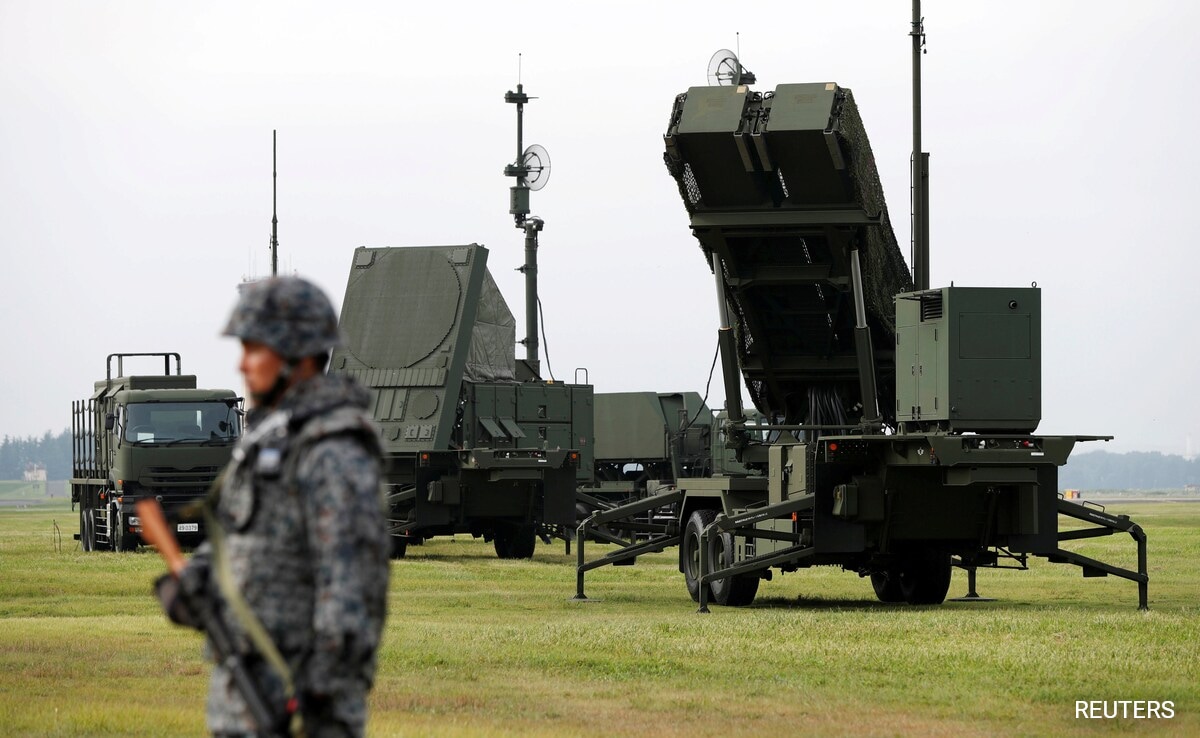
A US PATRIOT missile launcher.
But the cost offset is a problem the West has failed to answer since Russia’s war on Ukraine four years ago.
So what is the Shahed drone?
Stripped down, a Shahed-131 or Shahed-136 is a small, delta-winged missile with a propeller-driven engine at the back.
The name means ‘witness’ in Farsi and were originally developed by an Iranian aerospace company, Shahed Aviation Industries in the early 2000s.
Both are roughly the same size; open-source assessments indicate they are between 2.5 and three metres long and weigh around 200kg at launch, most of which is the fuel and payload.
The 136 series has the longer range, i.e., between 2,000 and 2,500 kilometres, and the small size of both models means they can be launched from almost anywhere in Iran.
How Shahed-136 Kamakazi Drone Works? pic.twitter.com/svAVOnN8AL
— Engineering Explained (@Engineering67) March 5, 2026
The drones are precision-guided munitions that are launched using disposable rocket-boosters fitted to the underside.
Once fired, the booster is jettisoned and a four-cylinder, air-cooled piston-driven engine takes over propulsion. Fitting a propeller over a jet engine sacrifices speed – top speed is around 185 km per hour – but offers greater range and agility.
An explosive payload – up to 60kg – is fitted in the nose; some versions pack a 90kg payload but have shorter ranges.
Watch the successful intercept of an Iranian Shahed-136 one way attack drone somewhere over Israel. pic.twitter.com/KvZ6hwyZHx
— OSINT Aggregator (@AggregateOsint) June 14, 2025
It uses manually-uploaded coordinates to navigate and can hover over the chosen target before dive-bombing.
The Shahed drones were also used in the 12-Day War of June 2025 between Israel and Iran, and they are being used in large numbers by Russia in Ukraine. Kiev, though, has developed an efficient anti-drone squad, which President Volodymyr Zelenskiy offered to deploy in West Asia on condition the Western nations can force Vladimir Putin to accept a truce.
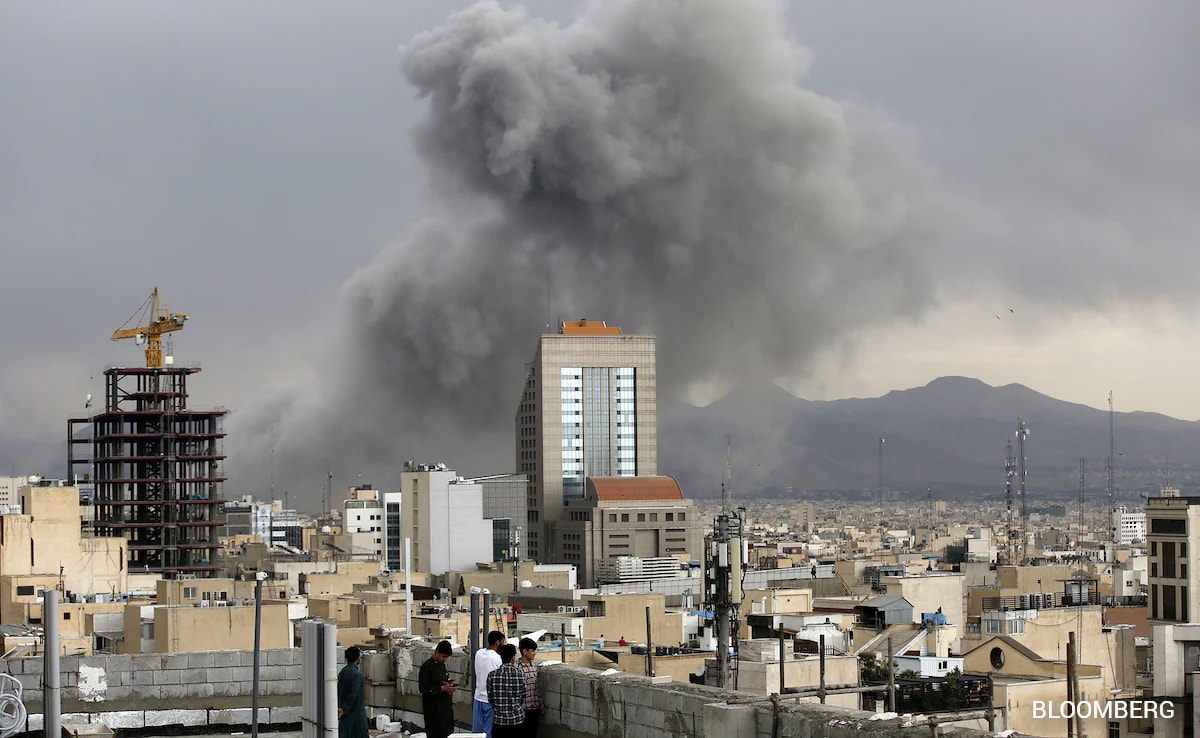
US PATRIOT/THAAD air defence systems report 90-96% interception rates against Shahed drones.
Iran’s drones are, therefore, cheap and efficient.
They are also difficult to detect.
The relatively low radar cross section, coupled with ease-of-launch makes them almost impossible to spot when being fired, though the buzzing noise from the piston engines do give it away during flight. Russia, though, has improved on some aspects, including night-op variations and a honeycomb structure inside the wings to reduce likelihood of radar detection.
But perhaps the biggest impact of the Shahed drones is the fact the US has been forced to play the same game.
US-Israel’s ‘new’ war
Washington has rolled out reverse-engineered versions of the Shahed in this war.
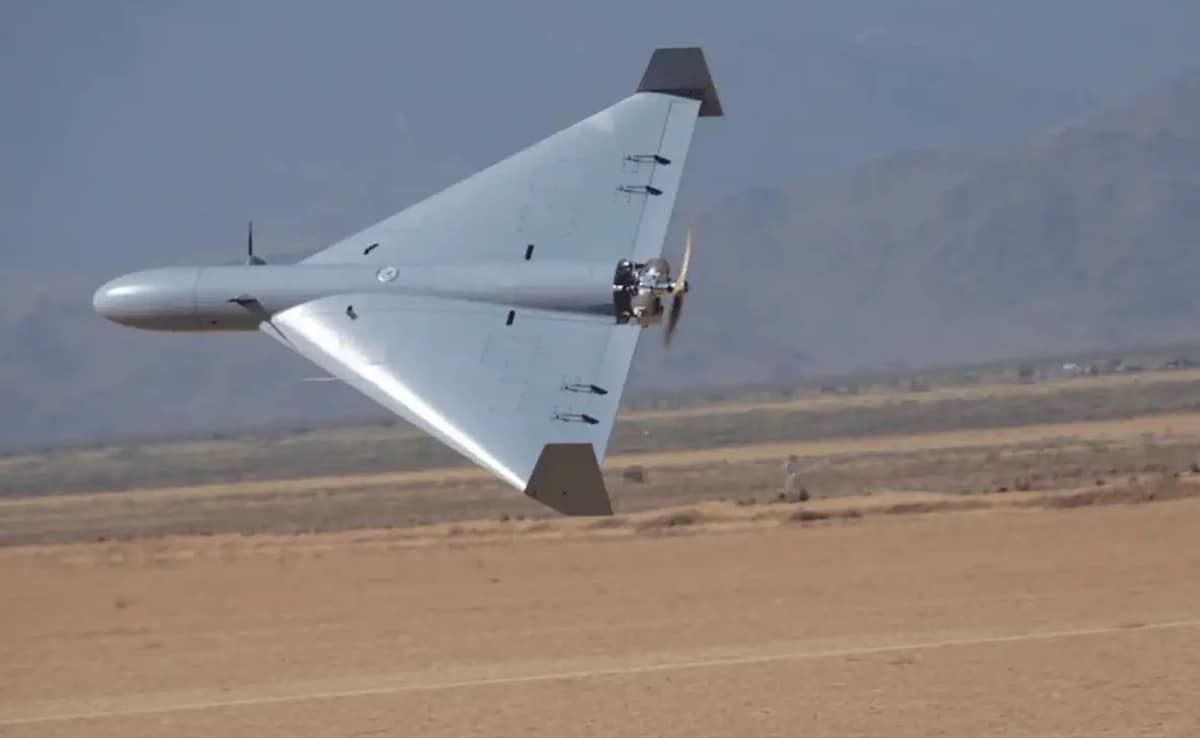
A US-made LUCAS drone in flight. Image posted on X by @shanaka86
LUCAS, or Low Cost Uncrewed Combat System, were described by US CENTCOM as “one-way attack drones… modelled after Iran’s Shahed drones”. Each costs around US$35,000 and, like the Shahed, is a precision-guided ‘loitering munition’.
READ | Cheap Drones, Claude AI, Cyberattacks: Behind US-Israel’s ‘New’ War On Iran
But this shift towards drone warfare is not an overnight development.
The US acknowledged the transition back in December last year, when it activated Task Force Scorpion Strike, its first ‘one-way attack drone squadron’ based in West Asia.
The evolution became most apparent, however, in the Russia-Ukraine theatre after exhaustion over a war in its fifth year forced the artillery-to FPV, or first-person view, move.
The future of warfare is, perhaps, becoming like a video game; user-operated UAVs that operate in offensive and defensive capacities, expanding front lines and converting them into ‘kill zones’ while minimising human costs.