

Iran spent years constructing underground bunkers to shield its vast missile arsenal from destruction. Now, days after US and Israel declared a unilateral war, Tehran’s strategy looks like a mistake.
US and Israeli planes and drones have been circling over dozens of cavernous bases in Iran, attacking missile-carrying launchers when they emerge to fire. The Iranian weapons have apparently been trapped below ground in some places after waves of heavy bombers dropped munitions on the underground bunkers, The Wall Street Journal reported.
Satellite imagery taken in recent days shows the remains of several Iranian missiles and launchers destroyed in Israeli and US airstrikes near the entrances of subterranean sites or “missile cities,” the American daily reported.
The sites include a cluster of bases near the southern city of Shiraz, which appear to have been struck multiple times, as well as bases near Isfahan, Tabriz and Kermanshah.
Almost all of the dozens of missile bases attacked during the conflict are underground but have aboveground buildings, entrances and roads that make it possible to identify the sites from satellite photos, as per analysts.
Iran’s Underground ‘Missile Cities’
In March 2025, the country released video footage of what it claimed was its largest underground facility. The location was not revealed. The clip showed senior commanders touring long, windowless corridors containing missile-carrying trucks.
Crude underground silos have been built at some bases for firing missiles without having to bring them out in the open. A base near the town of Khormuj in southern Iran is believed to have nine underground silos with such capabilities, Colin David, a former US Army missile specialist and a researcher with Alma, told WSJ.
These silos are little more than deep holes dug into the side of a mountain that point toward the Persian Gulf, with a paved entrance to the underground facility.
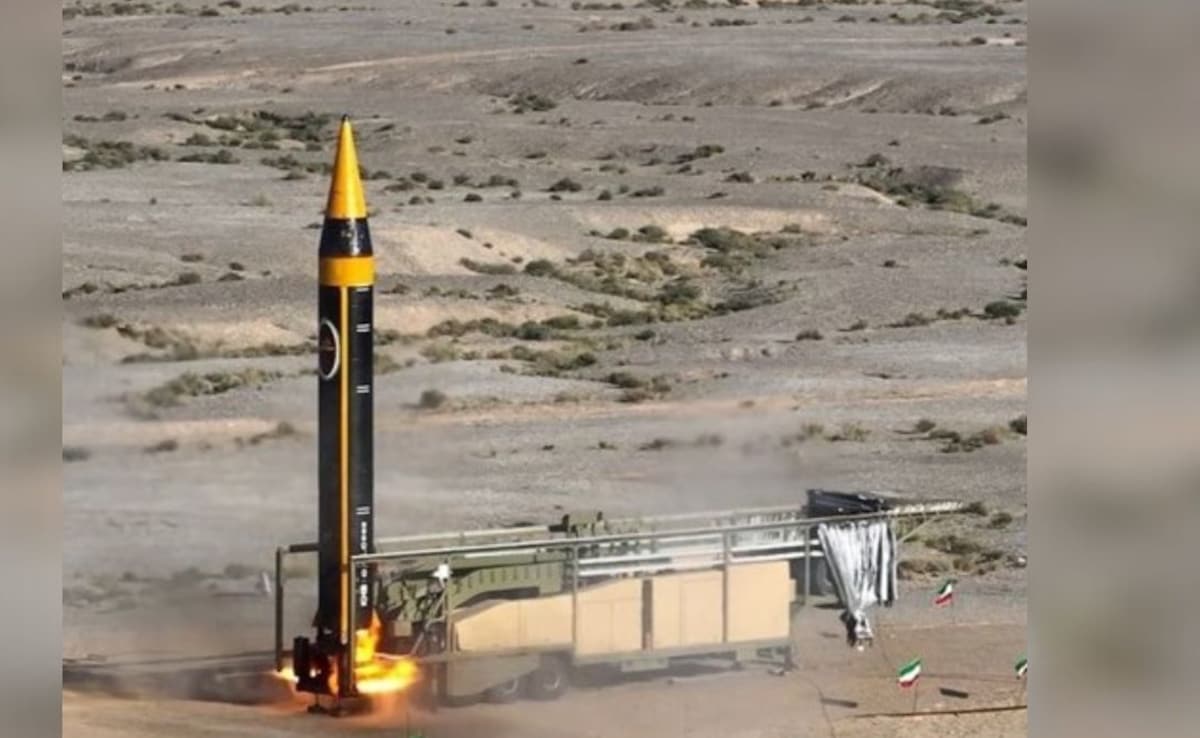
However, Iran has mostly abandoned the idea of firing missiles from underground launch locations, according to Decker Eveleth, a research analyst with Washington, D.C.-based think tank CNA Corp. He explained to the WSJ that the technical difficulties of reusing silos may have prompted this move.
Iran may have moved some of its truck launchers and missiles out of the bunkers before the war started, hoping to protect them from strikes by dispersing them.
The US and Israeli strategy of targeting the sites reflects both the large numbers of Iranian underground bases and the limited number of bunker-busting bombs in the American arsenal to penetrate beneath the ground and destroy the facilities, analysts said.
It also highlights urgency in Washington to cripple Tehran’s ability to fire missiles early in the war, before the supply of air-defense interceptors for knocking down the missiles is exhausted.
Iran’s Missile Capabilities
Israeli and US officials say ballistic missile and drone launches from Tehran have reduced since Saturday, in part due to Tel Aviv and Washington’s strikes on Iranian launch sites and other military infrastructure, Reuters reported. The decrease could also mean that Iran is preserving its missile stocks for a drawn-out war of attrition.
Estimates of the country’s missile stockpile vary widely, with the Israeli military estimating an arsenal of 2,500 before the war, while other analysts put the figure at around 6,000. The extent of the remaining supplies may prove crucial to how the conflict develops.